
Best Shopify Product Feed Apps 2026
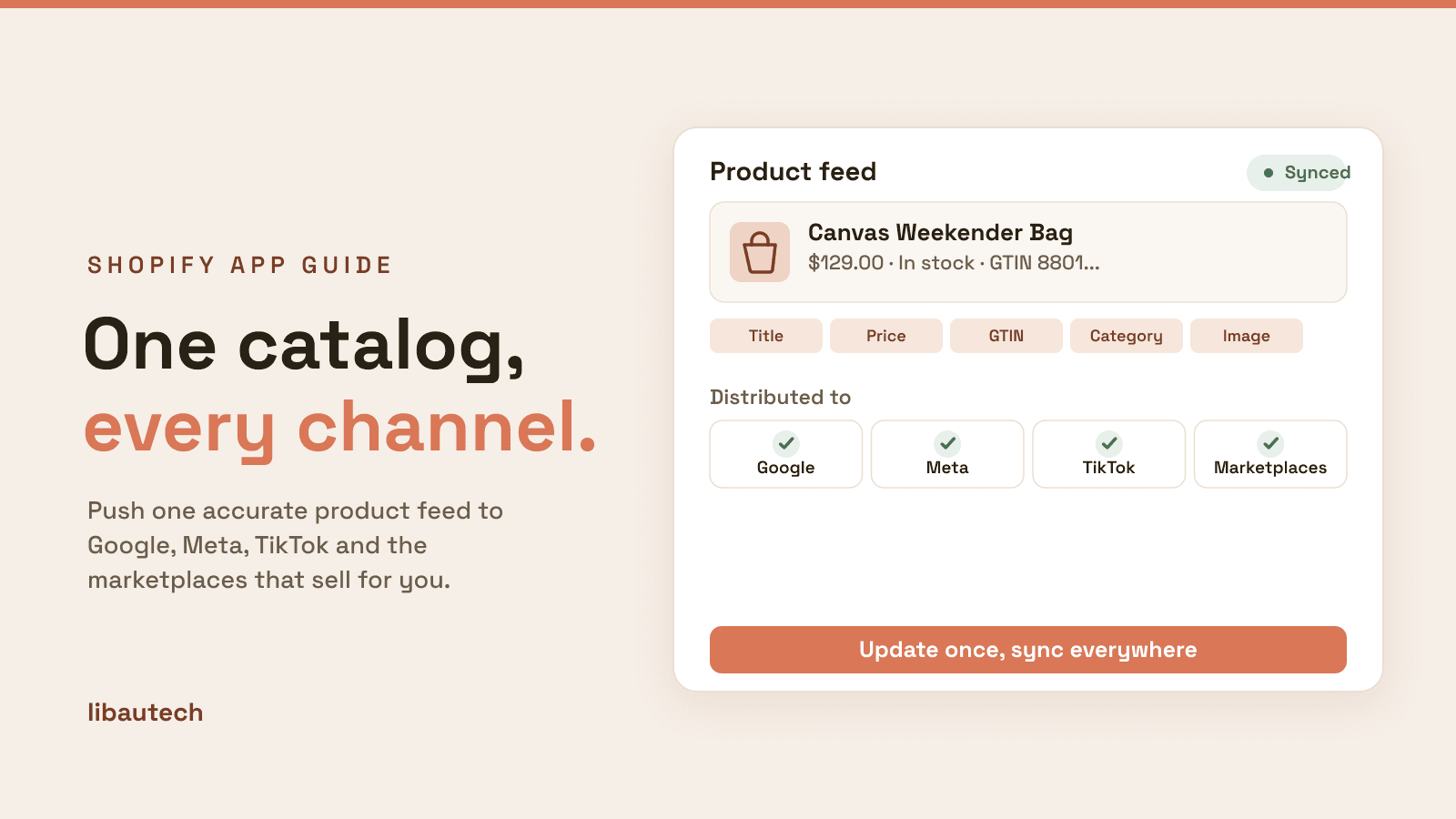
The best Shopify product feed apps in 2026 depend on where you sell. For Google Shopping, the free Google & YouTube channel is the default start, Simprosys wins on rule-based optimization, Nabu by AdNabu on AI-assisted, international feeds, and DataFeedWatch on multichannel orchestration. For social, use Meta's free Facebook & Instagram app and Flexify to optimize it, and the native TikTok app for TikTok. For marketplaces, Shopify Marketplace Connect covers Amazon, eBay and Walmart. We do not make a product feed app, so this is a neutral roundup ranked on merit.
Key takeaways
- Product feed apps split by destination: Google Shopping feeds, social (Meta and TikTok) feeds, and marketplace (Amazon, eBay, Walmart) feeds. Pick by where you actually spend, not by one "best" app.
- Start free and native (Google & YouTube, Meta, TikTok, Marketplace Connect), then add a dedicated optimizer only when ad spend on that channel justifies it.
- The native channel apps show lower ratings because reviews capture setup and approval frustration; once connected they run reliably in the background.
- We do not sell a product feed app, so nothing here is ours and the ranking is on merit. Ratings are read from the live App Store, August 2026.
On this page
- The jobs of a product feed app
- Who needs which feed
- How we ranked these
- The 8 best product feed apps compared
- Google Shopping feed apps
- Social feed apps (Meta and TikTok)
- Marketplace feed apps
- Picking the right feed stack
- What native Shopify already handles
- Common product feed mistakes
- How AI search is reshaping feed strategy
The jobs of a product feed app
A product feed is a structured export of your catalog (titles, prices, GTINs, categories, images, availability) formatted for a specific destination. There is no single "best feed app" because the job changes by channel.
Google Shopping feeds push products into Merchant Center for Shopping and Performance Max campaigns. The work is optimization: clean titles, correct GTINs and categories, custom labels for bidding, and multi-country variants.
Social feeds push a catalog to Meta Commerce Manager (for Facebook and Instagram dynamic product ads) and to TikTok. The work is variant grouping and channel-specific image and title rules.
Marketplace feeds list products on Amazon, eBay and Walmart with real-time inventory and order sync, so a sale on one channel decrements stock everywhere.
A fourth job is emerging: AI search feeds, structured data that lets ChatGPT, Gemini and Perplexity cite your products. It is early, and we cover it as a trend rather than a mature app category below.
Who needs which feed
| Where you spend | Best feed | Why |
|---|---|---|
| Under $50K/mo Google ads | Native Google & YouTube | Free and reliable; the optimization gap does not yet justify a paid tool. |
| Serious Google spend, one channel | Simprosys or AdNabu | Rule-based optimization and Merchant Center fixes lift ROAS; AdNabu adds AI and international depth. |
| Multiple ad channels at scale | DataFeedWatch | One source feed orchestrated across Google, Meta, TikTok and marketplaces. |
| Meta (Facebook/Instagram) ads | Meta native, then Flexify | Start free; add Flexify for variant grouping and Meta-spec images once DPA budget grows. |
| Selling on marketplaces | Shopify Marketplace Connect | Free, first-party listing and inventory sync across Amazon, eBay and Walmart. |
How we ranked these
We do not make a product feed app, so nothing on this list is ours and there is no bias to disclose. We ranked within each job on: how well the feed is optimized for its destination, channel coverage, rating and review depth, and cost at real ad spend. We group by job rather than forcing a single ranking, because a Google feed tool and a marketplace connector solve different problems. Ratings and pricing are read from the live Shopify App Store as of August 2026, and several apps changed listing URLs, owners or review counts since this guide first published, which we have corrected.
The 8 best product feed apps compared
| App | Rating | Reviews | Price | Feed job |
|---|---|---|---|---|
| Google & YouTube by Shopify | 4.5 | 5,067 | Free | Google (native) |
| Simprosys Google Shopping Feed | 4.9 | 4,352 | From $9.99/mo | Google optimization |
| Nabu for Google Shopping Feed (AdNabu) | 4.7 | 511 | Free to 10 orders, then $19.99/mo | Google, AI + international |
| DataFeedWatch by Cart.com | 4.7 | 285 | From $59.99/mo | Multichannel orchestration |
| Facebook & Instagram by Meta | 3.7 | 5,085 | Free | Meta (native) |
| Flexify: Facebook Product Feed | 4.3 | 124 | From $4.99/mo | Meta optimization |
| TikTok | 4.8 | 15,357 | Free | TikTok (native) |
| Shopify Marketplace Connect | 4.3 | 1,940 | Free to install | Marketplaces |
Among the paid third-party tools, Nabu (AdNabu) and Flexify carry the Built for Shopify badge. The native channel apps and Marketplace Connect are first-party Shopify integrations. Ratings verified August 2026.
Google Shopping feed apps
1. Google & YouTube by Shopify (Native)
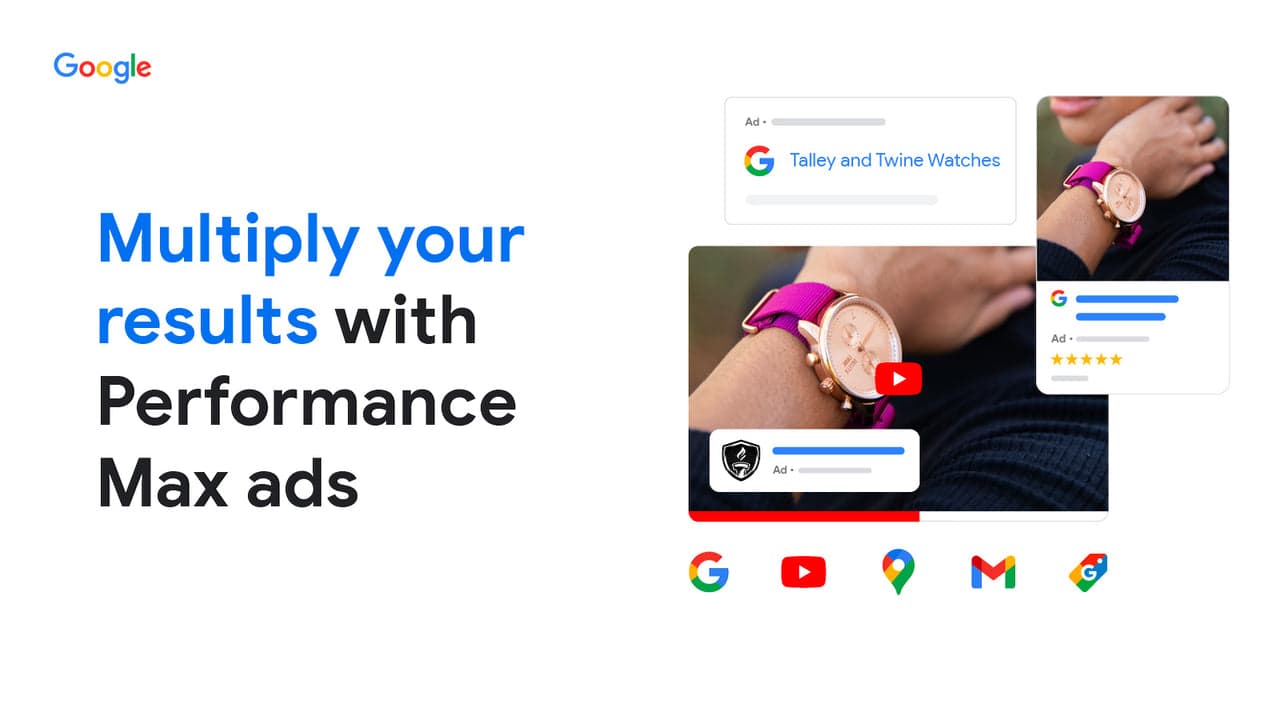
Shopify's official Google channel (4.5 across 5,067 reviews) handles the basics: connect Merchant Center, push a feed, run Performance Max, all free. It wins on simplicity and zero cost as the default starting point.
Strengths: native Merchant Center connection with no third-party auth, automatic feed push from the Shopify catalog, Performance Max from the admin, GTIN validation, YouTube shopping support, and closed-loop attribution through Shopify Analytics.
Watch-outs: limited rule-based optimization compared to Simprosys, and basic multi-country support. The rating reflects setup and approval frustration, not ongoing reliability; once products are approved it runs quietly.
Best for: most stores below roughly $50K/mo Google ad spend, where the optimization gap does not yet justify a paid tool. Free.
2. Simprosys Google Shopping Feed

Simprosys (4.9 across 4,352 reviews) is the go-to when the native app falls short. It wins on the depth of rule-based optimization for Google Shopping at accessible pricing.
Strengths: conditional title rules, multi-country feeds with currency conversion, bulk Google category assignment, custom labels for bidding, GTIN bulk-fixing, and Microsoft Bing Shopping support. Merchants consistently report ROAS lift after switching from native.
Watch-outs: focused on Google plus Bing, not multichannel, so stores also running serious Meta ads end up pairing it with a Meta tool. The depth takes time to configure.
Best for: stores running roughly $50K to $500K/mo Google ad spend where rule-based optimization earns its cost. Free plan, then from $9.99/mo.
3. Nabu for Google Shopping Feed by AdNabu
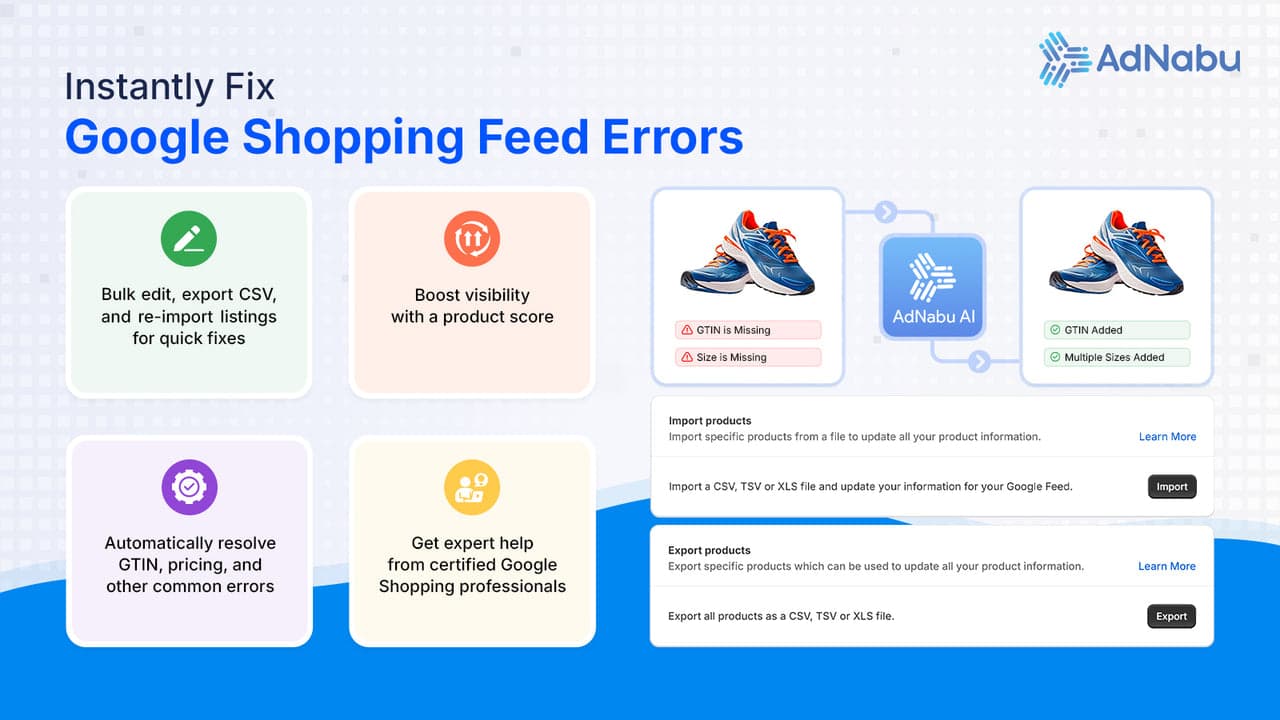
Nabu for Google Shopping Feed (4.7 across 511 reviews, Built for Shopify) handles advanced feed management for stores needing more than a native Google connection. Where the native app wins on free simplicity and Simprosys on accessible Google feed management, AdNabu wins on automated AI feed optimization, deep Shopify integration, instant product syncs, and flexible XML distribution, combining Merchant Center guidance and multichannel output in one Shopify-focused workflow.
Strengths: automated Merchant Center error suggestions and product scores; AI that improves titles, descriptions, highlights, brands, age groups and gender fields; feed rules, metafields and metaobjects for flexible mapping; bulk tools across 70-plus Google attributes; multilingual and multi-currency feeds with Shopify Markets and product taxonomy for regional consistency; review integrations (Judge.me, Loox, Okendo, Yotpo); XML distribution across Google Shopping and 2,000-plus marketplaces; Shopify Flow and headless support; blocklists for product inclusion; and hourly updates on advanced plans, with instant Shopify-to-Google sync and unlimited marketplace feeds on Plus.
Watch-outs: AdNabu does not create or manage Google Ads campaigns, so you still need Google Ads for campaign controls.
Best for: Shopify Plus merchants and agencies managing large catalogs across multiple countries, languages, currencies and marketing channels. Free through 10 monthly orders, then from $19.99/mo.
4. DataFeedWatch by Cart.com
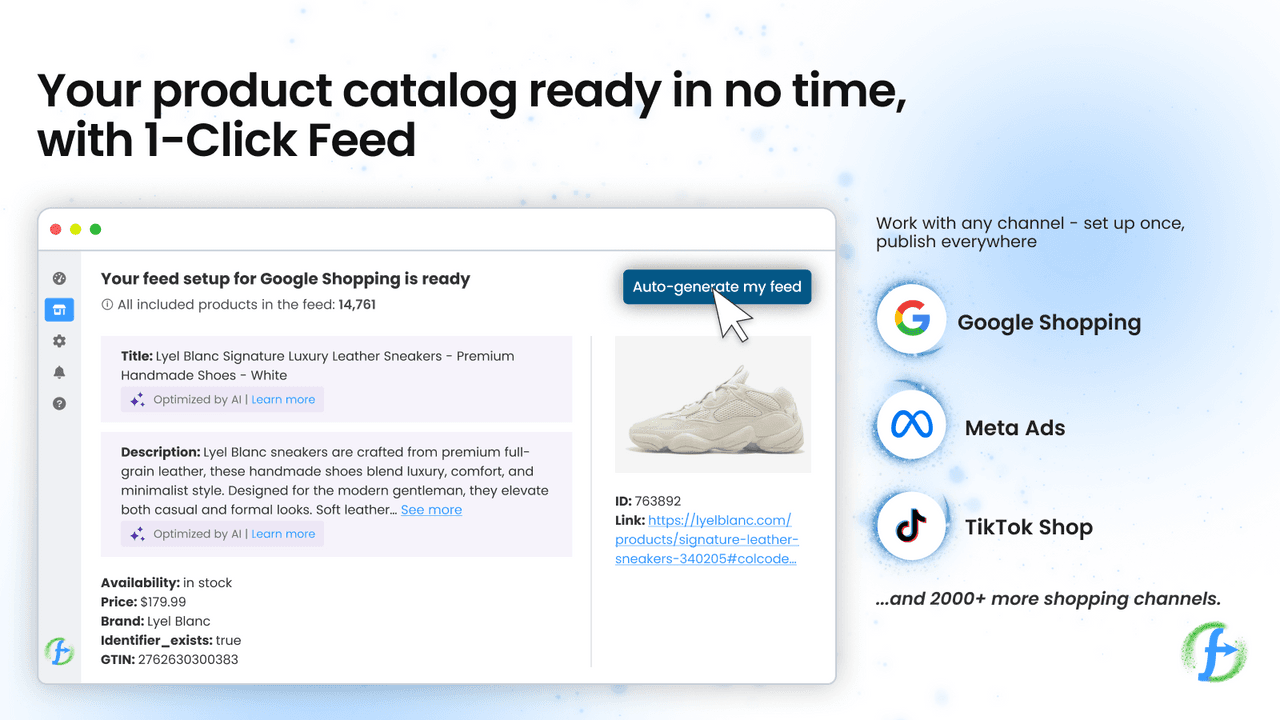
DataFeedWatch (4.7 across 285 reviews) is the enterprise feed manager: one source feed transformed into outputs for Google, Meta, TikTok, Amazon, eBay and 1,000-plus channels from one dashboard. It wins on multichannel orchestration depth no single-channel tool can match.
Strengths: a deep rule engine with conditional logic and regex, A/B testing on feed fields, a centralized diagnostics dashboard across all channels, ad-manager integrations for closed-loop attribution, and multi-currency and multi-language support.
Watch-outs: enterprise pricing from $59.99/mo puts it out of reach for small stores, and setup assumes marketing-ops support. The small Shopify review count reflects its primary market being enterprise web properties beyond Shopify.
Best for: stores spending $20K+/mo on shopping ads across multiple channels. From $59.99/mo, 14-day trial.
Social feed apps (Meta and TikTok)
5. Facebook & Instagram by Meta (Native)
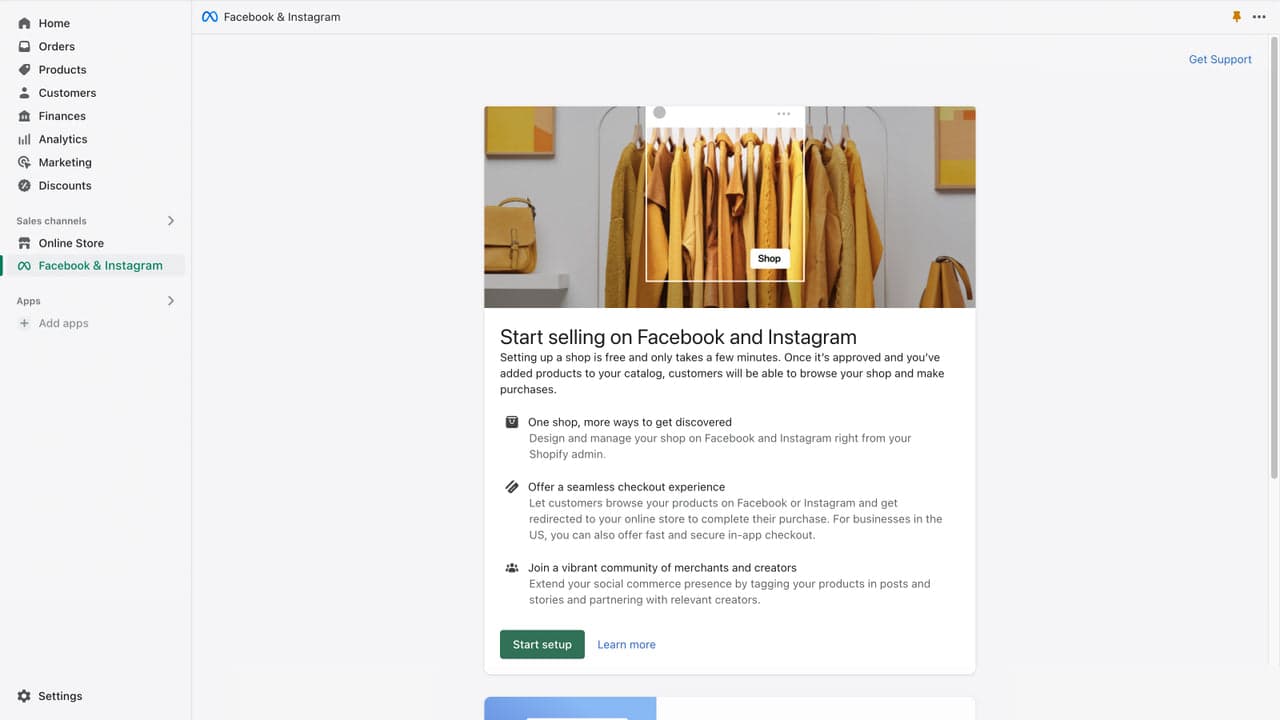
Meta's official channel (3.7 across 5,085 reviews) pushes a Shopify catalog to Meta Commerce Manager and powers dynamic product ads and Advantage+ Shopping Campaigns. It wins on simplicity and zero cost as the starting point for Meta paid acquisition.
Strengths: native Commerce Manager connection, Facebook Shop and Instagram Shopping, DPA and Advantage+ support, Pixel attribution, and automatic catalog push, all free.
Watch-outs: limited optimization, images follow Shopify defaults rather than Meta's recommended dimensions, and variants are treated as separate products without grouping, which fragments catalog ad performance. The rating is setup frustration, not runtime.
Best for: the foundation Meta feed for stores below roughly $5K/mo Meta ad spend. Free.
6. Flexify: Facebook Product Feed
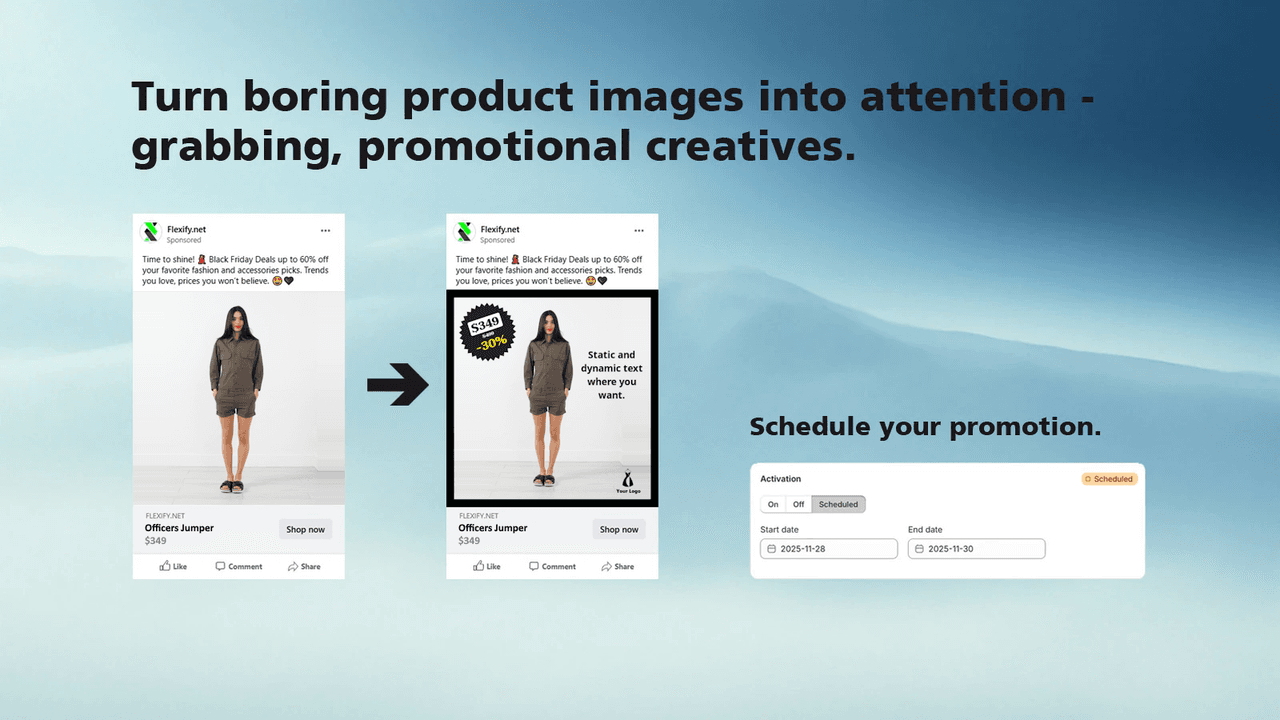
Flexify (4.3 across 124 reviews, Built for Shopify) rebuilds the Meta feed with smarter rules. It wins on Meta-specific optimization depth at low pricing.
Strengths: rule-based Meta title optimization, structured variant grouping (color and size as one product with options), image handling matched to Meta's recommended dimensions, custom labels for ASC segmentation, and A/B testing on titles. Stores running serious DPA or ASC budget see the catalog-quality difference in ROAS quickly.
Watch-outs: Meta-only, so stores also running Google end up pairing it with a Google tool, and it has a smaller review base than the category leaders.
Best for: stores running roughly $5K to $50K/mo Meta ad spend. Free plan, then from $4.99/mo.
7. TikTok (Native)
TikTok's official app (4.8 across 15,357 reviews) handles catalog feed and order sync for TikTok Shop and dynamic ads. It wins as the required connection layer for any store selling on TikTok, and it is free.
Strengths: native Business Center connection, TikTok Shop integration for in-app purchases, dynamic ad support, Pixel attribution, and order sync back into the Shopify admin.
Watch-outs: TikTok Shop is region-specific (mainly US, UK and Southeast Asia), so its value depends on your audience, and dedicated TikTok feed optimization is still nascent. For $10K+/mo TikTok spend, pair it with DataFeedWatch.
Best for: any store running TikTok Shop or TikTok dynamic ads. Free.
Marketplace feed apps
8. Shopify Marketplace Connect (formerly Codisto)
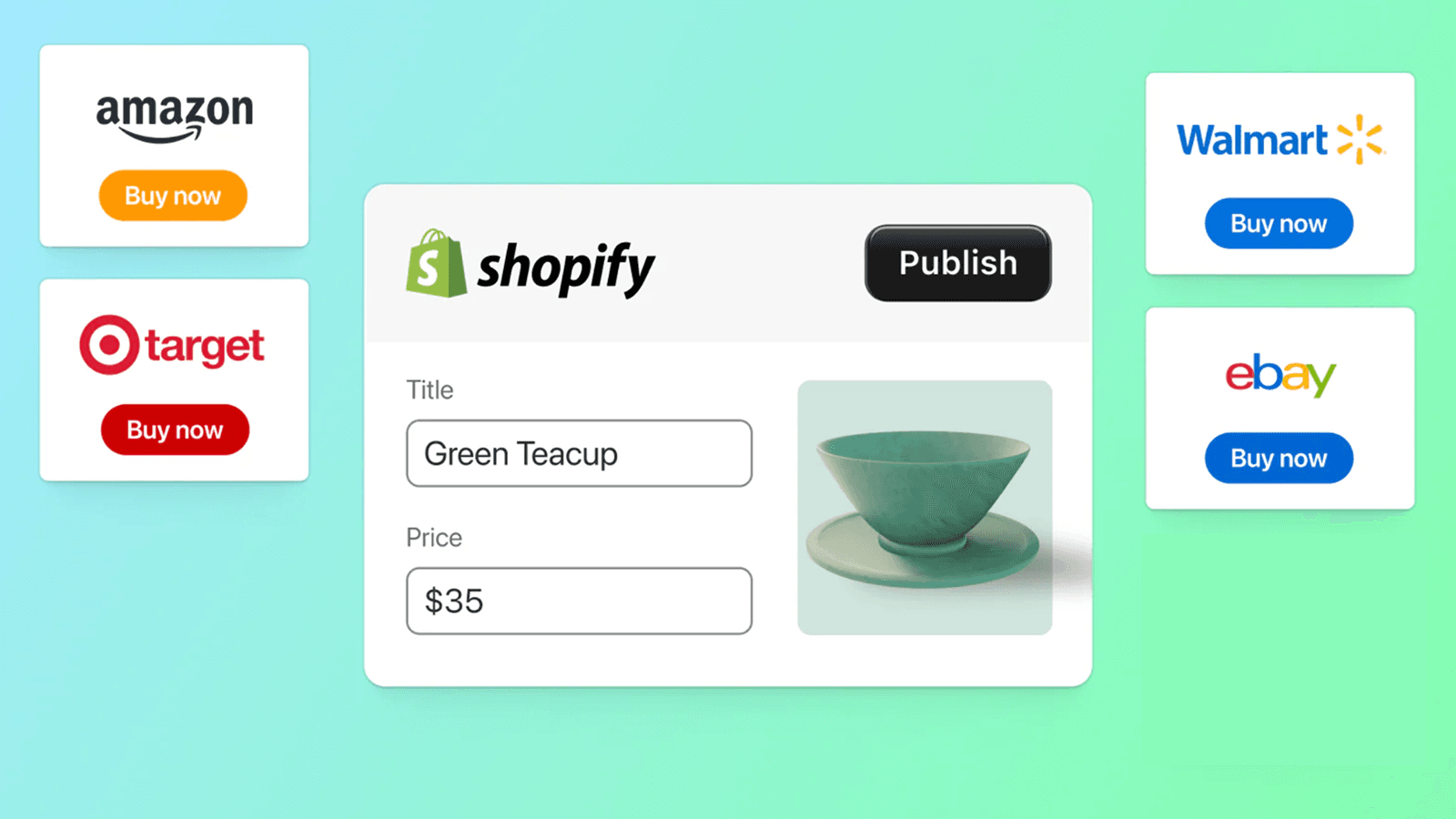
Shopify Marketplace Connect (4.3 across 1,940 reviews), the first-party successor to Codisto, lists Shopify products on Amazon, eBay, Walmart and Etsy with real-time inventory sync, so a sale on any channel decrements stock everywhere. It wins on being free, native and unified across marketplaces.
Strengths: unified multi-marketplace listing from one dashboard, real-time inventory and order sync, per-marketplace category mapping and pricing rules, and multi-currency support, all free to install (you pay only the marketplaces' own selling fees).
Watch-outs: depth on any single marketplace is lighter than dedicated single-marketplace tools, and marketplace connections can need occasional reauthentication. The rating reflects that operational friction more than the core sync.
Best for: stores selling across Amazon, eBay and Walmart that want one free, native connector. Free to install.
Picking the right feed stack
Do not buy one app for everything. Match the feed to the channel you spend on.
Google only, starting out: the free native Google & YouTube app.
Google at scale: Simprosys for rule-based optimization, or Nabu (AdNabu) for AI and international feeds.
Many ad channels at scale: DataFeedWatch to orchestrate them from one source feed.
Meta ads: start with Meta's native app, add Flexify when DPA budget grows.
TikTok: the native TikTok app, required for any TikTok selling.
Marketplaces: Shopify Marketplace Connect for Amazon, eBay and Walmart.
Which product feed app fits your store?
Pick the channel that matters most and we will point you to the best fit. We do not make a feed app, so every pick here is chosen on merit.
What native Shopify already handles
Before paying for a feed app, know what Shopify does for free. The native Google, Meta and TikTok channel apps each connect their platform and push a basic feed from your catalog at no cost, and Marketplace Connect does the same for marketplaces. Shopify's product taxonomy, Markets (for multi-country), and metafields feed all of these. For a store with clean product data (correct GTINs, categories and images) and modest ad spend on a single channel, the native apps are genuinely enough. A paid optimizer earns its place only when the rule-based improvements move ROAS by more than the subscription costs.
Common product feed mistakes
Buying an optimizer before you need one. Under modest ad spend on one channel, the native app plus clean product data beats paying for optimization you will not measurably benefit from.
Missing or invalid GTINs. The single most common reason products get disapproved in Merchant Center. Fix GTINs in Shopify (or with a feed tool's bulk fixer) before blaming the feed.
Letting variants fragment the catalog. Meta and Google both perform worse when every color and size is a separate listing. Use a tool that groups variants correctly.
Running two tools for the same channel. A native app and an optimizer for the same destination can double-submit and conflict. Let the optimizer own the feed for that channel.
Ignoring image specifications. Inheriting Shopify's default image dimensions instead of the channel's recommended specs measurably lowers ad rendering quality on some product types.
How AI search is reshaping feed strategy
A new destination is emerging. Shoppers increasingly ask ChatGPT, Gemini, Copilot and Perplexity for product recommendations, and those assistants cite stores whose product data they can read. This is not yet a mature app category the way Google Shopping is, but the direction is clear: structured product schema, clean catalog data and an llms.txt-style machine-readable layer are becoming part of feed strategy, not just traditional Shopping ads. The same discipline that makes a clean Google feed (accurate titles, categories, availability and structured data) is what makes your catalog legible to AI shopping answers. Get the fundamentals right for Google and Meta first, and you are most of the way to being AI-search ready.
Think your app belongs on this list?
We review submissions against the same criteria we rank on and add the ones that qualify. If you build a Shopify app in this category, send it in.