
8 Best Shopify Store Locator Apps (2026)

The best Shopify store locator apps in 2026 put your physical stores, dealers and stockists on a searchable map, so shoppers can find where to buy in person and you drive foot traffic to your locations and retail partners. They cover a few jobs: store and stockist locators with search and filters, Google Maps based locators, and directions and navigation. TA MAPPY and Stockist lead the category. We do not make a store locator app, so this is a neutral roundup ranked on merit, and it is honest that a locator only helps if you have places to find.
Key takeaways
- A store locator is for brands with physical stores, dealers or retail stockists, not pure online-only stores. If shoppers can only buy from you online, you do not need one.
- TA MAPPY is the most-reviewed and free, and Stockist is the established, powerful choice for brands with many locations or stockists. Both handle search, filters and clean maps.
- Many locators use the Google Maps API, which can require a key and incur costs at scale. Check whether an app uses Google Maps or a free map provider, and what that means for your volume.
- A locator is only as good as its data. Keep addresses, hours and closures accurate, or you send customers to a closed or wrong location. It also helps local SEO and your retail partners. Ratings and pricing are from the live App Store as of August 2026.
On this page
What a store locator app does
A store locator adds a searchable map to your site that shows where customers can find your products in person. It matters for omnichannel and wholesale brands, and it does a few things.
Map your locations, plotting your stores, dealers or stockists on an interactive map, with a list of the nearest options as the shopper searches.
Let shoppers search and filter, by ZIP or postcode, city or product, so someone can quickly find the closest place that stocks what they want.
Show details and directions, opening hours, phone, services and a link to directions or navigation, so finding the store leads to an actual visit.
Scale to many locations, with bulk import and management, for brands with dozens or hundreds of stockists to keep current.
Do you need a store locator
Match your situation to a row before you install anything.
| Your situation | Best pick | Why |
|---|---|---|
| Many stores or stockists | Stockist | Powerful search, filters and bulk import. |
| A few locations, on a budget | TA MAPPY | A free, full-featured map locator. |
| Want the Google Maps look | SC Store Locator | A familiar Google Maps experience. |
| Drive in-store visits | Way | Directions and navigation to the store. |
| Online only, no physical presence | No app needed | A locator only helps if there is somewhere to visit. |
How we ranked these
We do not make a store locator app, so nothing on this list is ours and there is no bias to disclose. We ranked on search and filtering, map quality and customization, location management at scale, directions, rating and review depth, and price. We also flag whether an app leans on the Google Maps API, which can add cost at volume. Ratings and pricing are from the live Shopify App Store as of August 2026.
The 8 best store locator apps compared
| App | Rating | Reviews | Price | Best for |
|---|---|---|---|---|
| TA MAPPY: Store Locator & Maps | 5.0 | 414 | Free plan available | A free, full-featured locator |
| Stockist Store Locator | 5.0 | 322 | From $10/mo | Many locations and stockists |
| SC Store Locator & Google Maps | 4.7 | 233 | Free plan available | A Google Maps experience |
| Way: Google Maps Store Locator | 4.6 | 120 | Free plan available | Directions and navigation |
| GA: Google Maps+Store Locator | 5.0 | 109 | Free plan available | A well-rated Google Maps locator |
| Storemapper Store Locator Map | 4.9 | 87 | Free plan available | A simple, established locator |
| Progus Store Locator Map | 4.7 | 84 | Free plan available | A budget-friendly locator |
| Mapstore Store Locator Map | 4.9 | 15 | Free plan available | A clean, newer option |
Ratings and pricing verified from live listings, August 2026. Most locators have free plans; higher location counts and premium features often sit on paid tiers.
The apps, ranked
1. TA MAPPY: Store Locator & Maps
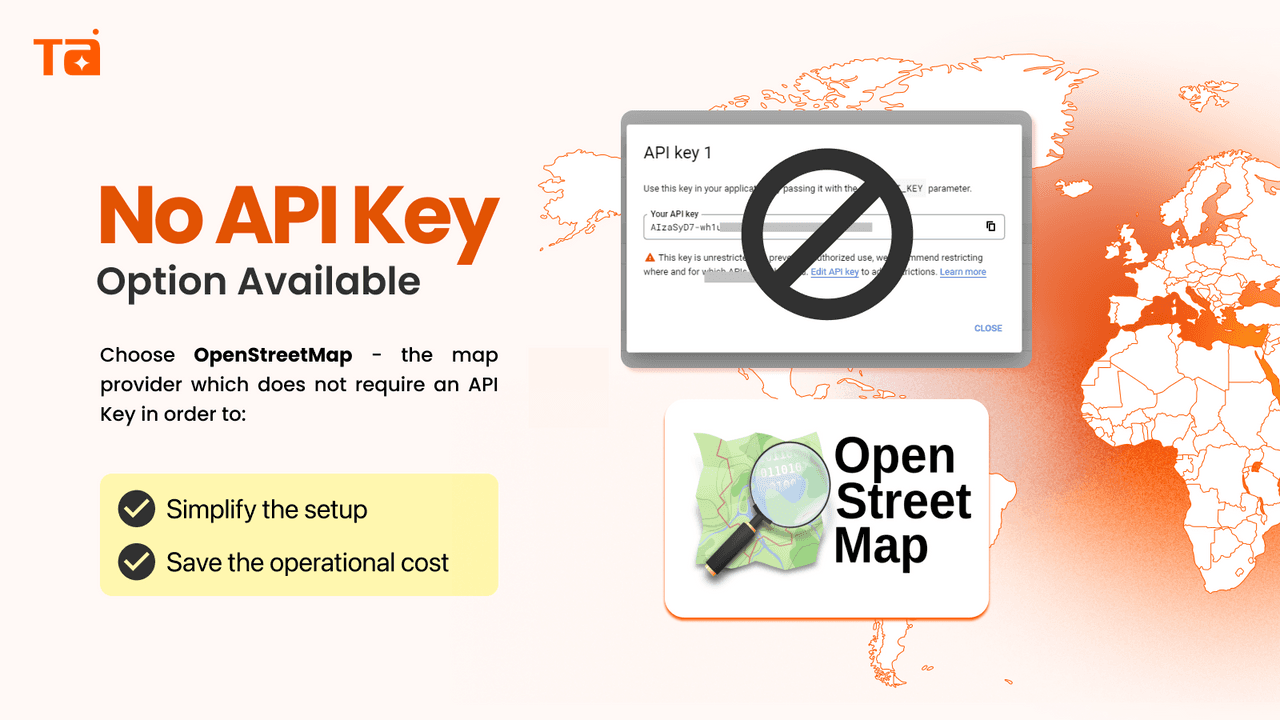
TA MAPPY (5.0 across more than 400 reviews) is the most-reviewed locator and a strong free option. It plots stores and dealers on a customizable map with search and filters, imports locations in bulk, and starts free, which makes it the practical default for most brands.
Strengths: the deepest review base at a 5.0, a genuinely free plan, custom map styling, filters and bulk import.
Watch-outs: the largest location counts and premium styling may need a paid tier.
Best for: most brands wanting a capable, free locator. Free plan available.
2. Stockist Store Locator
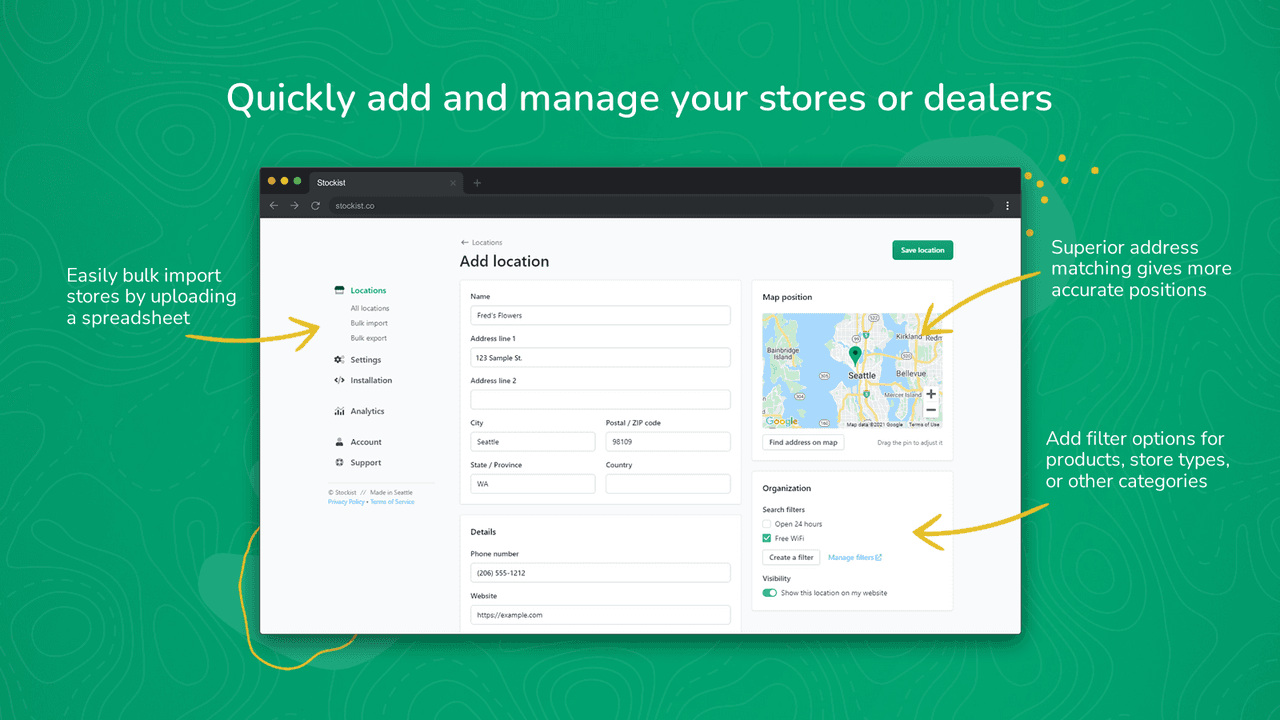
Stockist (5.0 across more than 300 reviews) is the established, powerful locator, especially for brands with many retail stockists. It offers fast search, filtering, bulk import and a clean, fully customizable map, and is a favorite of wholesale-driven brands.
Strengths: excellent search and filtering, easy management of hundreds of locations, and a polished, reliable experience.
Watch-outs: it starts at a monthly fee, so it suits brands with a real stockist network rather than a single shop.
Best for: brands with many stores or retail stockists. From $10/mo.
3. SC Store Locator & Google Maps

SC Store Locator & Google Maps (4.7 across roughly 230 reviews), by Shop Circle, is a well-rounded Google Maps locator with search, directions and a customizable list, on a free plan, for stores that want the familiar Google Maps feel.
Strengths: a familiar Google Maps interface, search and directions, and a free plan, from an established developer.
Watch-outs: Google Maps use can require an API key and add cost at scale, so check the plan details.
Best for: stores wanting a Google Maps locator. Free plan available.
4. Way: Google Maps Store Locator

Way: Google Maps Store Locator (4.6 across roughly 120 reviews) emphasizes getting shoppers to the store, with map directions and navigation front and center, plus a free plan, for retailers focused on driving actual visits.
Strengths: a directions-first approach, Google Maps navigation, and a free tier.
Watch-outs: a slightly lower rating, and, like other Google Maps apps, watch API considerations at scale.
Best for: retailers wanting to drive in-store visits. Free plan available.
5. GA: Google Maps+Store Locator

GA: Google Maps+Store Locator (5.0 across roughly 110 reviews) is a well-rated Google Maps locator with search and clean location listings, on a free plan, a solid alternative for stores that prefer the Google Maps experience.
Strengths: a 5.0 rating, a clean Google Maps locator, and a free plan.
Watch-outs: a smaller review base than the leaders, and the usual Google Maps API considerations.
Best for: stores wanting a well-rated Google Maps locator. Free plan available.
6. Storemapper Store Locator Map

Storemapper (4.9 across roughly 85 reviews) is a long-established, straightforward store locator: easy to set up, with a clean map of your locations, for stores that want a reliable, no-fuss result.
Strengths: a proven, simple locator with a 4.9 rating and quick setup.
Watch-outs: fewer advanced features than Stockist, so it suits simpler location needs.
Best for: stores wanting a simple, reliable locator. Free plan available.
7. Progus Store Locator Map

Progus Store Locator Map (4.7 across roughly 85 reviews) is a budget-friendly locator that maps your stores with search, on a free plan, for stores that want the basics done well without extra cost.
Strengths: an affordable, capable locator with a free plan and a solid rating.
Watch-outs: a smaller review base, so pilot it against your specific needs.
Best for: stores wanting a budget locator. Free plan available.
8. Mapstore Store Locator Map
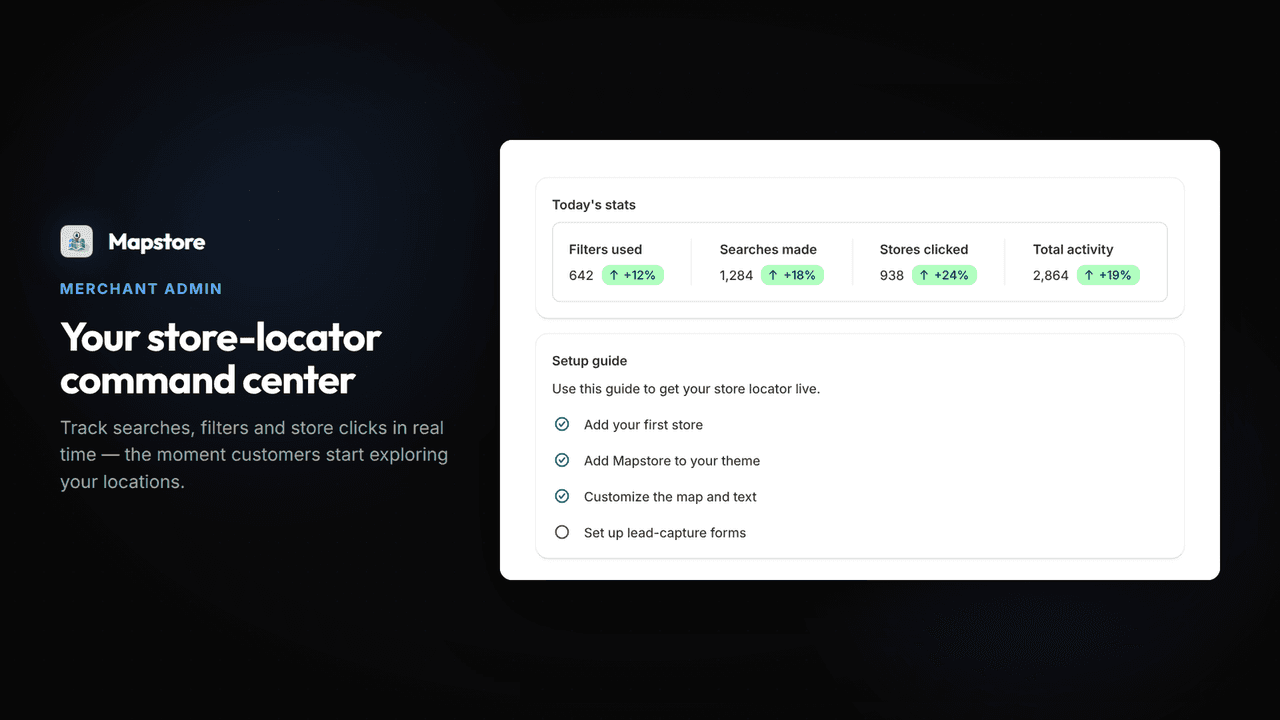
Mapstore (4.9 across a small base of 15 reviews) is a clean, newer store locator with a modern map and simple setup, on a free plan, for stores that want a fresh, tidy result.
Strengths: a modern, clean map, a 4.9 rating so far, and a free plan.
Watch-outs: a small review base, so treat it as newer and test before relying on it.
Best for: stores wanting a clean, newer locator. Free plan available.
Which store locator to choose
Best overall and best free: TA MAPPY.
Best for many stockists: Stockist.
Best Google Maps locator: SC Store Locator or GA.
Best for directions: Way.
Best simple option: Storemapper.
Which store locator app fits your store?
Pick what you need most and we will point you to the best fit. We do not make a store locator app, so every pick here is chosen on merit.
Common store locator mistakes
Installing one with no locations to show. A locator only helps omnichannel and wholesale brands. If you sell online only, it adds clutter and confusion, not value.
Letting location data go stale. Wrong addresses, old hours or closed stores frustrate customers and waste trips. Keep your location data current, and mark temporary closures.
Ignoring Google Maps API costs. Many locators use Google Maps, which can require an API key and incur charges at high traffic. Check whether your app uses Google Maps or a free provider, and budget accordingly.
Skipping search and filters. A map with no ZIP search or product filter makes shoppers hunt. Enable search and, if relevant, filtering by product or service so people find the right location fast.
Forgetting mobile and directions. Most locator use is on phones, on the go. Make sure the map and list work well on mobile and that a tap opens directions in the phone's maps app.
Think your app belongs on this list?
We review submissions against the same criteria we rank on and add the ones that qualify. If you build a Shopify app in this category, send it in.